On the part one of the procedure the third compound was labeled as Unknown 8. Thin Layer Chromatography Hayley Williams willi553gostocktonedu CHEM 2125 007 262018 Abstract In the Thin Layer Chromatography TLC experiment food dyes analgestic tablets and three different solvents were used to identify and determine polarity of known and unknown compounds.
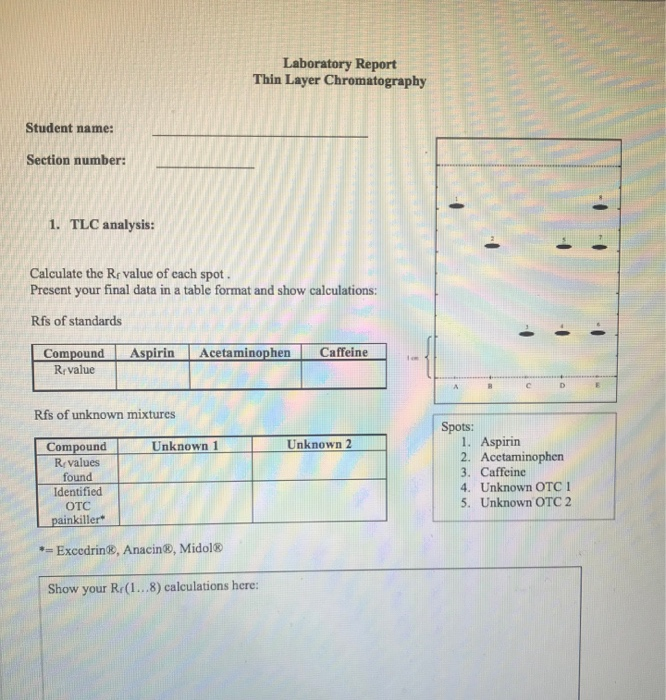
Solved Laboratory Report Thin Layer Chromatography Student Chegg Com
Chromatography is a separation technique based on difference in polarity of molecules.
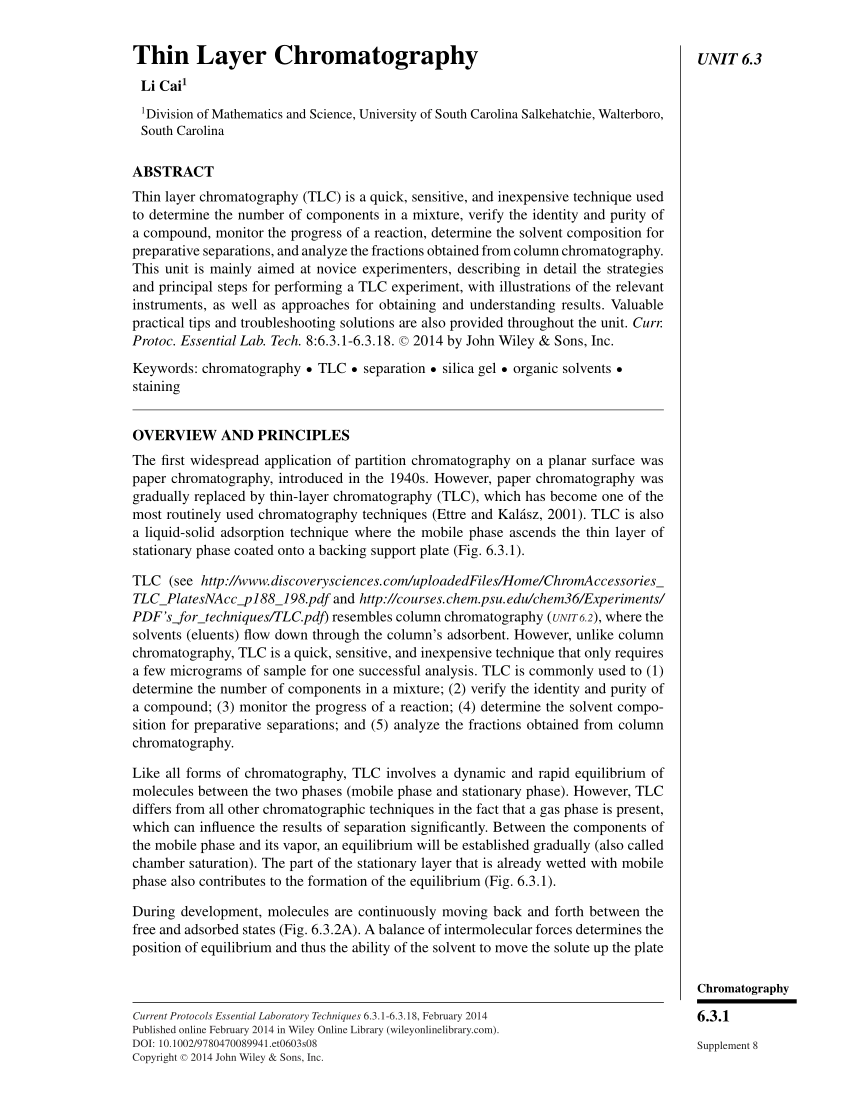
. It can be used to separate mixtures to determine the purity of a substance or to monitor the progress of a reaction. RESULTS AND DISCUSSION. For example synthetic chemists may use it to monitor reactions and biochemists may use TLC to separate and identify biomolecules whereas forensic analysts may use it to separate and identify drugs of abuse in.
Thin layer chromotography is a special of adsorption in which thin layer of adsorbent supported on a flat surfaces is utilized instead of a column of adsorbent in a simple words thin layer chromatography techniques is used to separate mixturesThin layer chromotography techniques was performed on a sheet of glass or aluminium foil. Most likely this will have been paper chromatography Figure 24 as the materials are cheap but still effective. There are many forms of chromatography but one thing that remains constant throughout all of the types of chromatography is.
Keep an eye on solvent labels and dispose of all waste in the appropriate containers. TLC can also be used to identify compounds. Introduction Mixtures of compounds are very common in Organic Chemistry.
Naturally occurring materials are. Chapter 6_ Thin Layer Chromatography Part 1 Lab Reportpdf. Chromatography Lab Report Discussion.
Aspirin and ibuprofen by using the thin layer chromatography TLC. Thin layer chromatography or TLC is a method for analyzing mixtures by separating the compounds in the mixture. A lab report analysis is simply a shortened lab report that highlights the analysis of the data that was collected during a laboratory experiment only-infohostnmtedu.
Identify the composition of an unknown drug mixture by using TLC. Caffeine contains four amine groups that are extremely polar as a result of the hydrogen bond and amide functional group. Thin-layer chromatography TLC is an extremely valuable analytical technique in the organic lab.
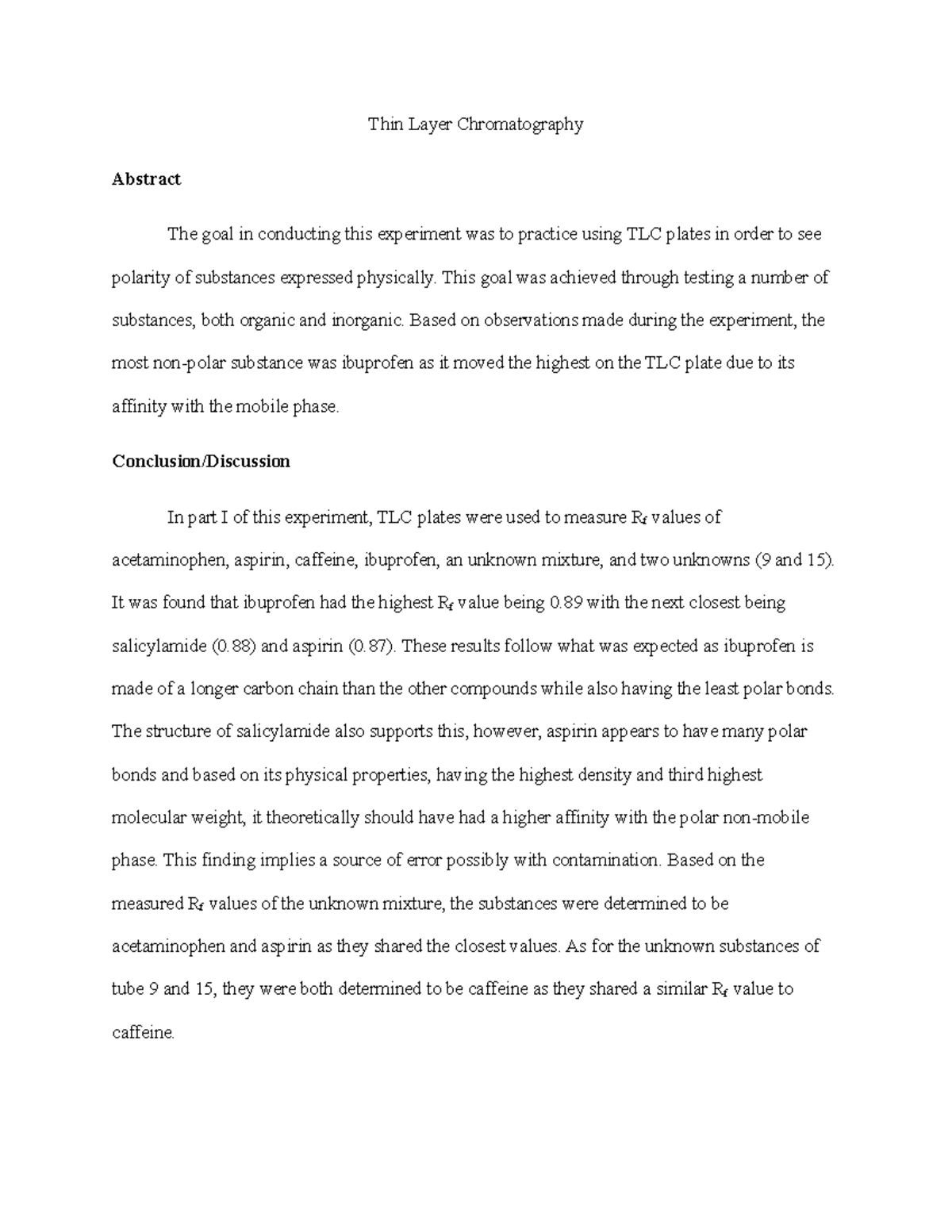
Thin Layer Chromatography Lab Report - 522 Apr 12 2013 Discussion Using the Thin Layer Chromatography experiment caffeine was found to be the most polar due to the fact that it stayed closer to the stationary phase. Caffeine contains four amine groups that are extremely polar as a result of the hydrogen bond and amide. Discussion Thin layer chromatography is a useful means of quickly characterizing the main active ingredients of certain commercial analgesics containing aspirin caffeine acetaminophen and ibuprofen when they do not have many other organic compounds in significant proportions.
Explain basic principles of chromatography in general. Thin layer chromatography lab report discussion Many students enter into organic chemistry already having made a form of chromatography in their academic career whether at school or in general chemistry. In this experiment Thin Layer Chromatography TLC was performed for separating organic compounds.
TLC can be used to help determine the number of components in a mixture the identity of compounds and the purity of a compound. TLC is a chromatography technique that being used in separating organic compounds. By observing the appearance of.
There are different types of chromatography. The purpose of this experiment are to distinguish polar and non-polar solvent to perform analysis technique using TLC and to differentiate the retention factor Rf for different compounds. It provides a rapid separation of compounds and thereby gives an indication of the number and nature of the components of a mixture.
After completing this experiment the student should be able to. Thin Layer Column Chromatography By. Experiment 6 Thin-Layer Chromatography Thin-layer chromatography TLC is an extremely valuable analytical technique in the organic lab.
No lab report is required for. Paper Chromatography Lab Report. In this case there are four chemical compounds have to be separated thereby choosing a suitable solvent as a mobile phase is.
Introduction Thin layer chromatography also known as TLC is the physical separation of a mixture into its individual components by distributing the components between a stationary phase the porous TLC plate and a mobile phase the solvent that moves through the stationary phase and carries the material that needs. In the food dye experiment the developing solvent used. Lab 1 - Thin Layer Chromatography Objective In this laboratory you will separate spinach pigments using thin layer chromatography TLC.
Chemistry 2273a - 2009 5 Figure 3. Report or an analysis for a lab report. Paper thin-layer TLC column high performance liquid HPLC and gas chromatography GC.
Thin layer chromatography is one of the oldest most flexible and most versatile separation techniques 5 6. The polarity of the solute polarity of solvent and polarity of absorbent are crucial factors that determine the mobility rate of a. Lab 5 Discussion Conclusion Reference.
The rate at which a compound moves in respect to the solvent front the retention factor Rf is characteristic of. Thin-Layer Chromatography illustrating the separation of the same mixture described for column chromatography in Figure 2. To save time run the tlc experiment while the column chromatography is underway.
Perform column chromatography in the fume hood tlc on the bench. Most reactions produce more than one product. Thin Layer Chromatography Introduction Thin Layer Chromatography or TLC is a technique used as a separation and identification technique.
Thin-Layer Chromatography TLC OUTCOMES. Thin Layer Chromatography Results and Discussion elizabeth valcourt chem 54602 thin layer chromatography 10 october 2017 introduction. Chromatography can be used as an analytical technique andor a.
Describe important aspects of TLC. Discussion Using the Thin Layer Chromatography experiment caffeine was found to be the most polar due to the fact that it stayed closer to the stationary phase. Discussion This experiment was completed successfully and the unknown was identified.
Discussion The theory behind thin-layer chromatography TLC is thin layer chromatography TLC is an valuable technique in the organic lab. The term chromatography actually means colour writing and signifies a technique by which the substance to be examined is placed in a vertical glass tube containing an adsorbent the different segments of the substance traveling through the adsorbent at distinctive rates of velocity according to their.
Pdf Thin Layer Chromatography

Doc Lab Report 2 Thin Layer Chromatography Hayley Williams Academia Edu

Pdf Thin Layer Chromatography Mark Buluma Eugine Academia Edu
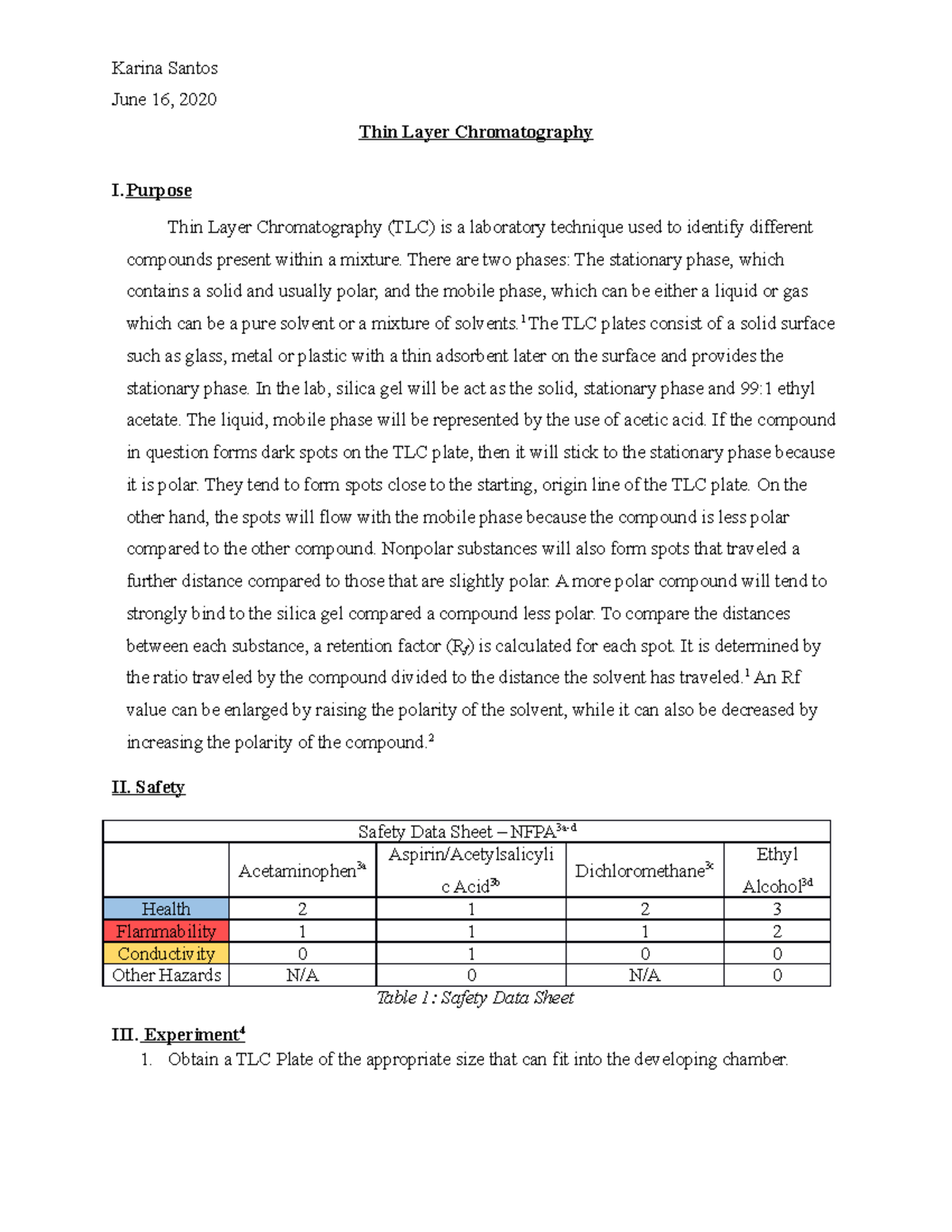
Thin Layer Chromatography Lab Report 3201 Organic Chemistry Acc Studocu
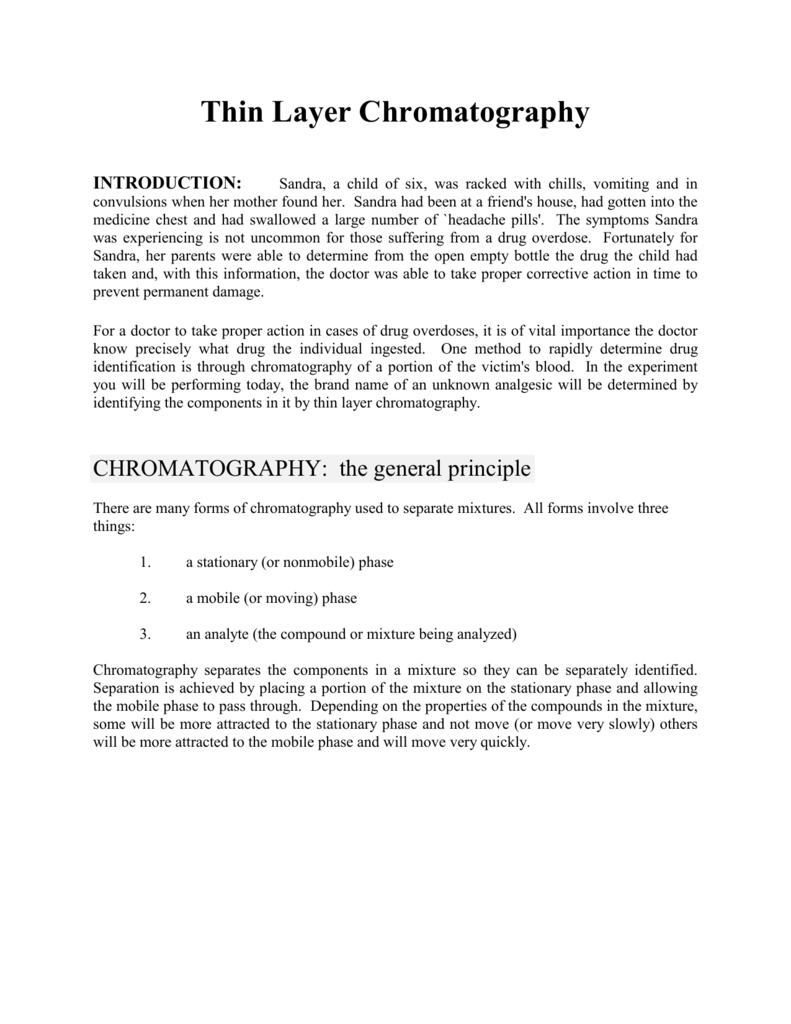
Thin Layer Chromatography

Lab 5 Paper Amp Thin Layer Chromatography

Lab 5 Discussion Conclusion Reference Pdf Thin Layer Chromatography Solvent
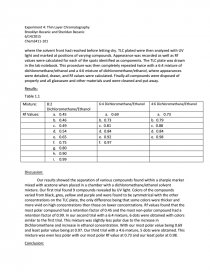
Lab Report Thin Layer Chromatography Lab Report
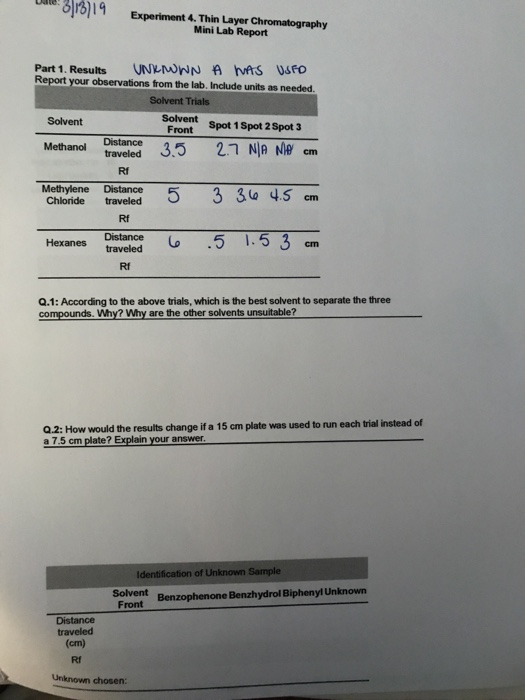
Solved 19 Experiment 4 Thin Layer Chromatography Mini Lab Chegg Com
Pdf Methods Of Extraction And Thin Layer Chromatography Determination Of Phospholipids In Biological Samales

Thin Layer Chromatography Lab Report Emr Ac Uk

Thin Layer Chromatography Lab Report Emr Ac Uk

Experiment 1 Thin Layer Chro Column Chromatography In Layer
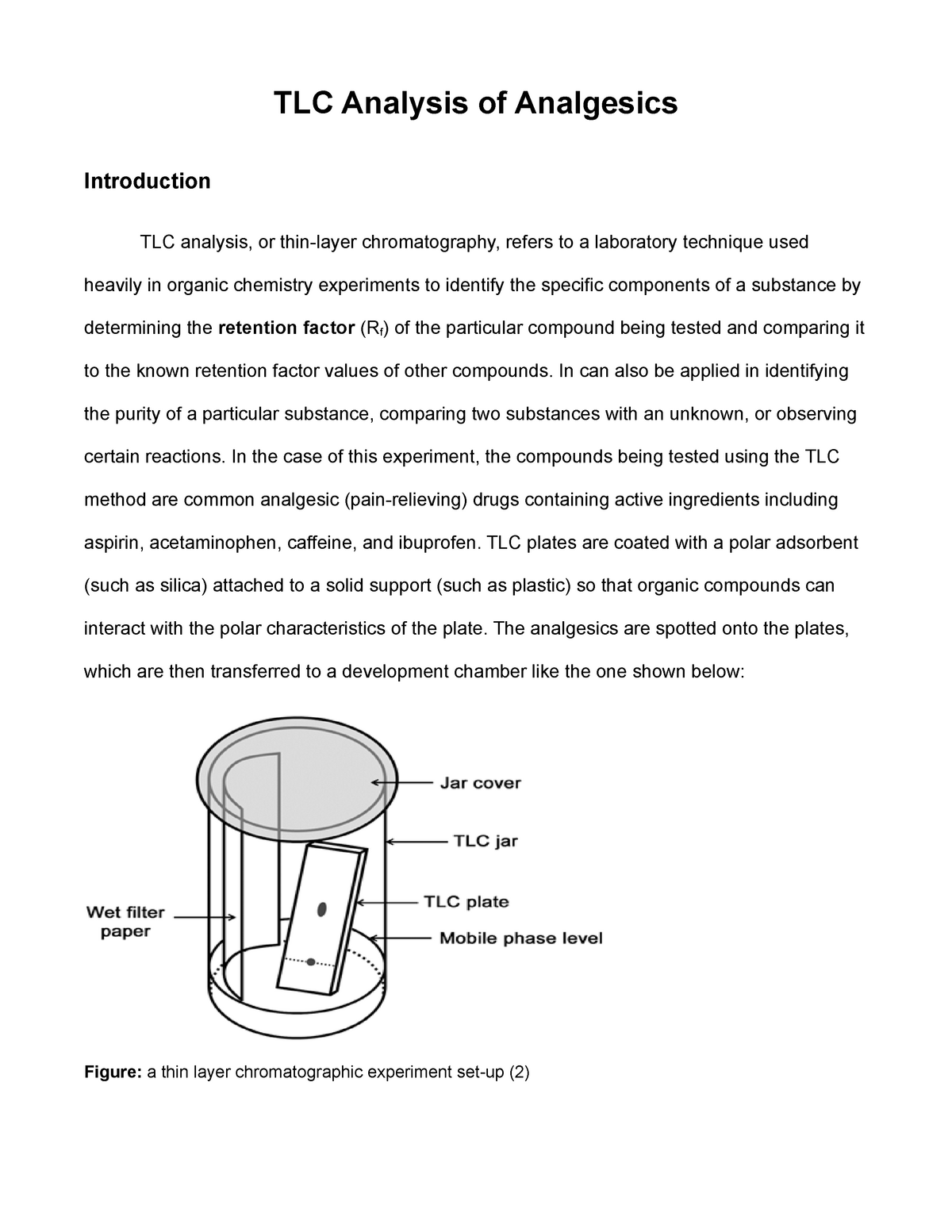
Organic Chemistry Laboratory Experiment Tlc Analysis Of Analgesics Studocu

7 Thin Layer Chromatography
Thin Layer Chromatography Chem255 Organic Chemistry I Laboratory Studocu

Thin Layer Chromatography Lab Report Docsity

Thin Layer Chromatography Lab Report Docsity
Solved Thin Layer Chromatography Lab Informal Reportthis Is Chegg Com
